
A little haven of coolness
Nans-sous-Sainte-Anne
Bicycle rentals nearby
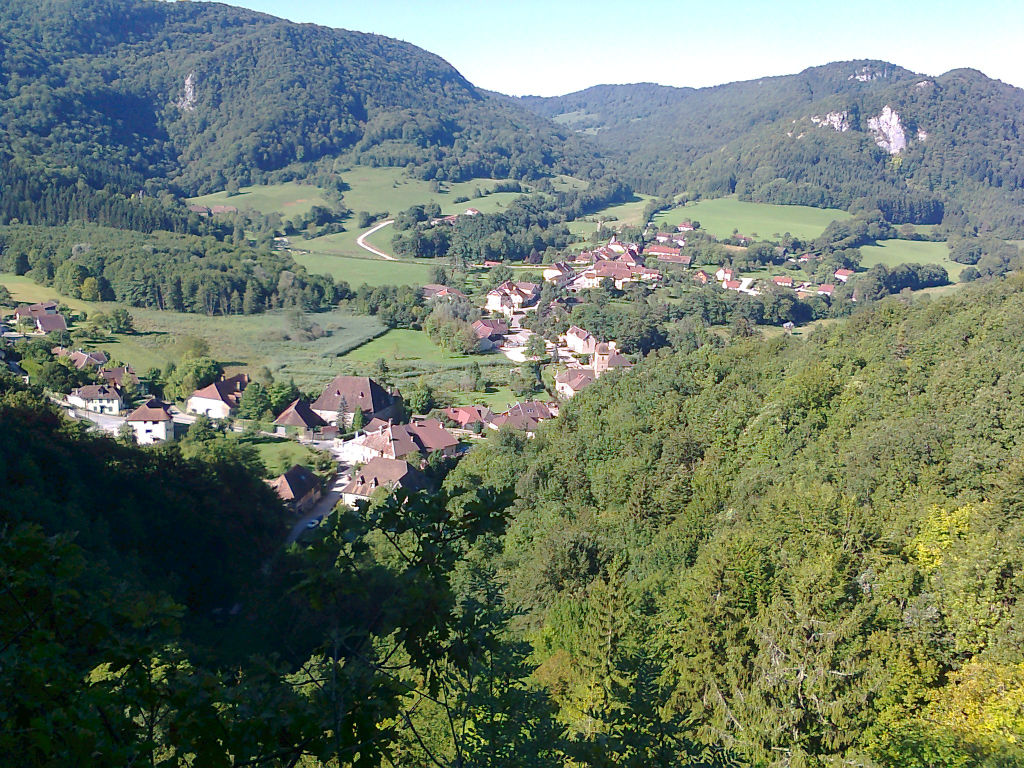
A Village Nestled in a Green Haven
Tucked away in a magnificent valley of endless deciduous forests and towering limestone cliffs lies the peaceful village of Nans-sous-Sainte-Anne—a little paradise shaped by both nature and human hands.
And at the bottom of this sublime valley flows the Lison, a turbulent tributary of the Loue.
Whether you arrive in Nans-sous-Sainte-Anne on foot through the valley, by car via Saraz, or via the road from Salins-les-Bains… your eyes are immediately captivated by the beauty of the place!
This dense, deep wilderness with its untamed forest gives the impression of having reached the end of the world… The cluster of rather squat, welcoming houses surrounding the “imperial-style” bell tower of the little church creates such a sense of contentment that it’s easy to imagine the perfect haven of peace where you just want to stop for a few moments to enjoy the gentle breeze whispering in your ear.
From Springs to the Source
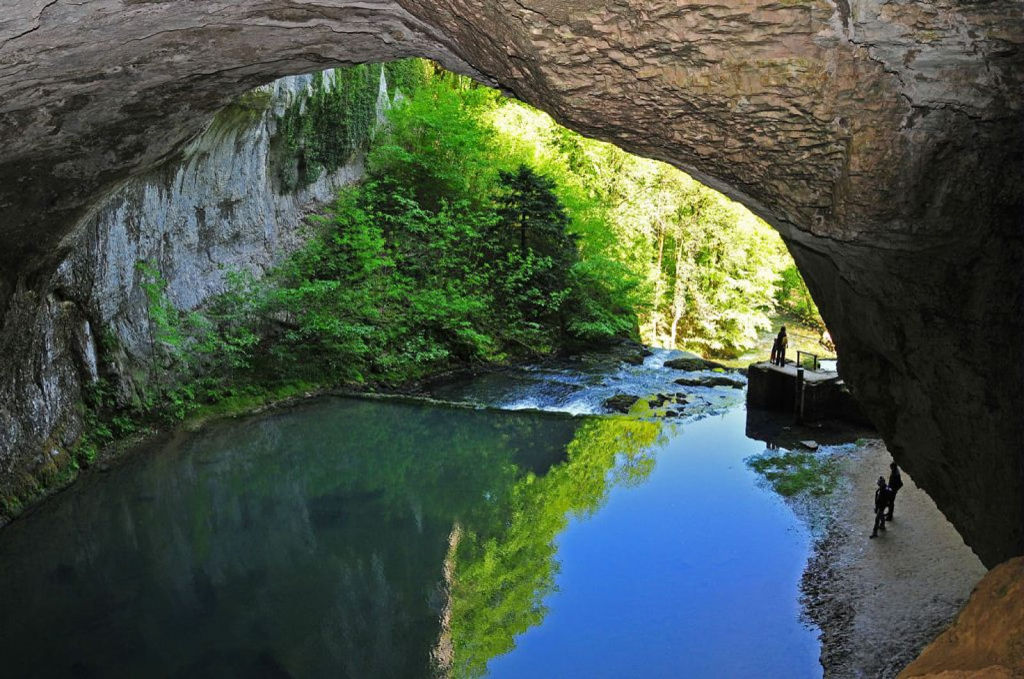
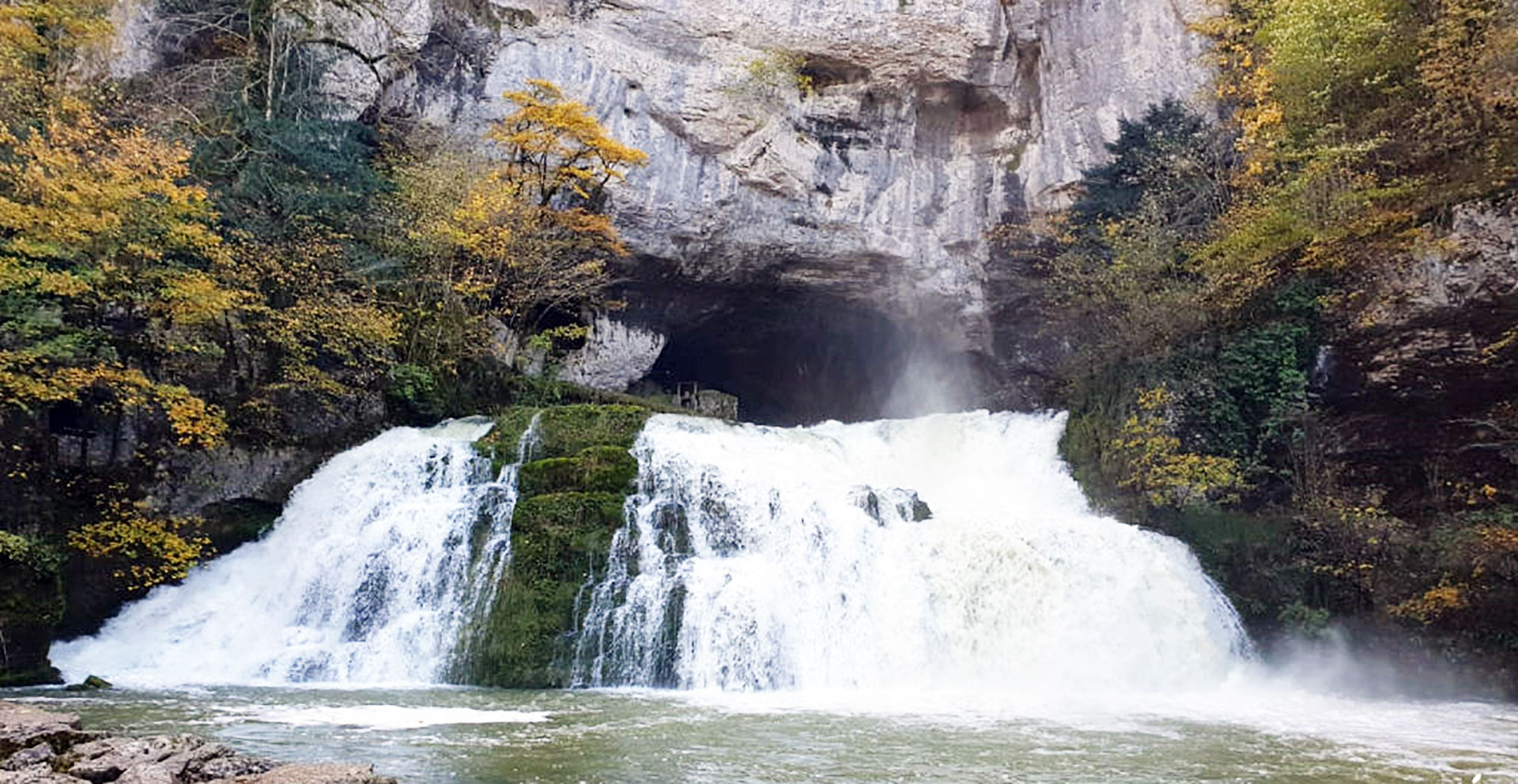
The Lison Spring is a natural site of great interest in the heart of a preserved landscape.
At the foot of a high limestone cliff at the bottom of a steep-sided valley, water gushes from a cave in an endless cascade—a spectacular and mesmerizing sight! The shades of green in summer, or the multicolored hues in autumn, highlight these exceptional geological phenomena. Everything here is as wild as can be, untamed and unspoiled!
The spring is a resurgence fed by a 100 km² watershed where streams become groundwater that seeps into sinkholes, chasms, or dolines and eventually emerges at the Lison spring.
A rich history & outdoor activities
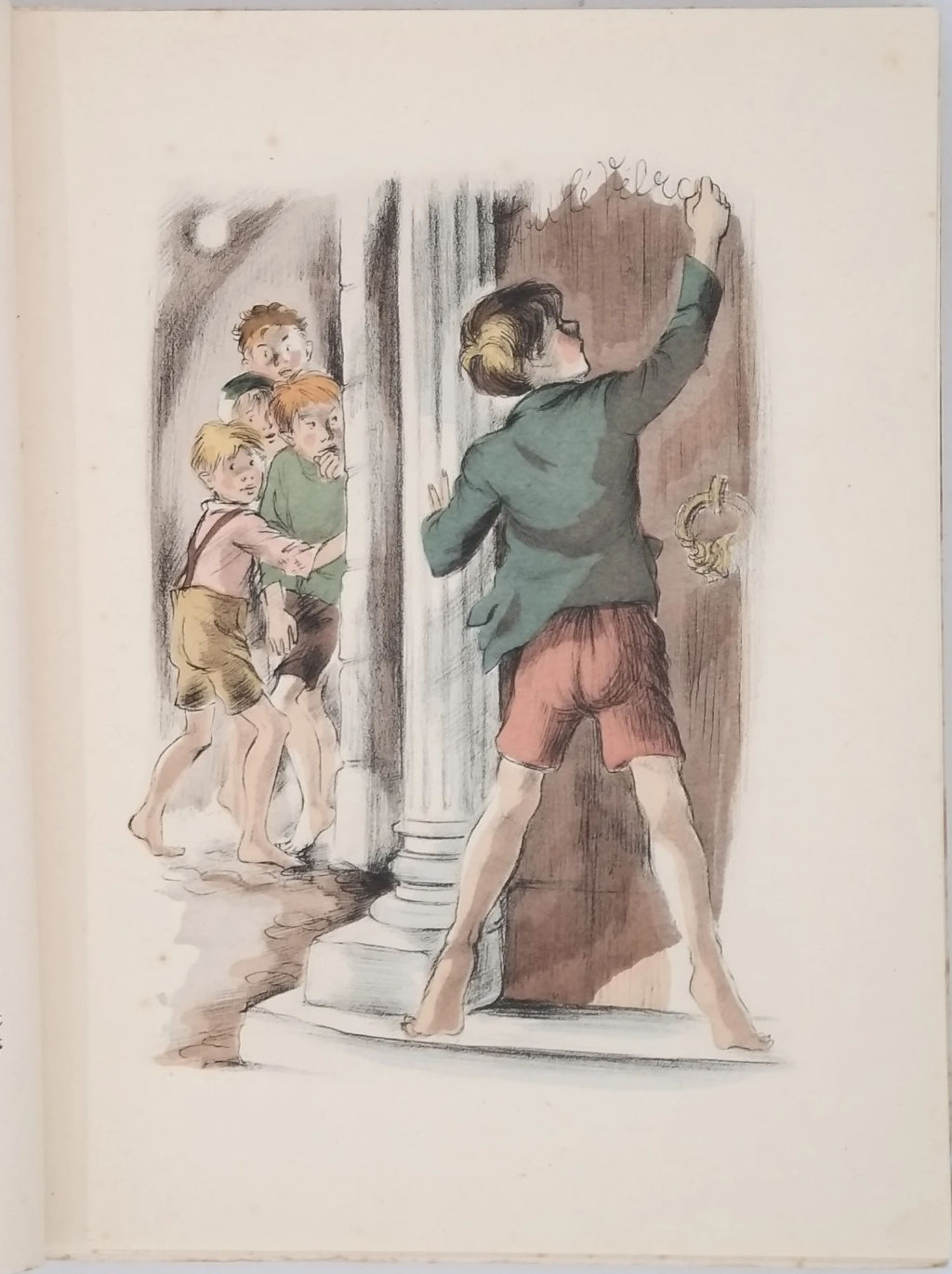
Have you heard of “The War of the Buttons”?
It is, first and foremost, a famous book by Louis Pergaud and a legendary film by Yves Robert.
Many legends and stories have shrouded this place in mystery… but here we will focus only on Louis Pergaud’s brief time there.
This illustrious writer spent part of his childhood in Nans, while his father was a schoolteacher in the village. He is said to have drawn the inspiration for his novel “La Guerre des Boutons” from the rivalries between the children of Nans and those of Montmahoux, a neighboring village. … but no one is certain of that!
A short excerpt from “La Guerre des Boutons”:
“So, taking his piece of chalk from the bottom of his pocket and standing on his tiptoes as high as he could, Lebrac wrote on the heavy, weathered, blackened oak panel that closed off the sacred place this terse inscription, which was to cause a scandal the next day at mass, far more for its heroic and provocative crudeness than for its fanciful spelling: ‘Tou lé Velrant çon dé paigne ku!'”
Louis Pergaud (1882–1915), author of *The War of the Buttons* and the animal stories *From Goupil to Margot*, winner of the 1910 Prix Goncourt.
Tastings, strolls, tours, and outdoor activities
Discover the source of the Lison River and all the surrounding natural sites listed below, with numerous well-marked hiking trails.
For a day trip, several restaurants, as well as a cheese shop and a grocery store, offer the chance to enjoy lunch and refreshments on-site featuring local products!
For outdoor adventures, don’t miss the via ferrata, one of the most beautiful in the region! And for those who love exploring underground, the caving sites will offer some wonderful surprises.
Just a stone’s throw away, a stop at this former factory of cutting tools—which operated until 1969—is a must.
www.museedelataillanderie.fr/
The tour rounds out the getaway with an immersive experience into the heart of Franche-Comté craftsmanship at what was once an authentic production center—notably for scythes—featuring all the hydraulic mechanisms that still work today, including a blower system unique in the world.
A permanent exhibition also traces life and working conditions at this factory between 1865 and 1969.
Biodiversity Protection and Refuge
The source of the Lison was the first site in France to be designated a natural site, following the first environmental protection law, known as the Beauquier Law* (April 1906), which was enacted primarily to protect the site, then under threat. Since 1892, it has been listed as an exceptional natural site in tourist guides.
A haven of peace where many animal species find refuge, including the Peregrine Falcon, the Eagle Owl (which are protected under European law), the White-bellied Swift, and the Common Raven, which nest in the site’s cliffs. The Montagu’s Harrier, the Woodlark, and the Red-backed Shrike inhabit the open habitats. Other vertebrate species, such as the green lizard and the wall lizard, thrive in the dry grassland habitats. This is also the case for the Succisa checkerboard, a butterfly found on the site’s outlying areas. Forest ruts are home to the yellow-bellied toad.
Seven bat species are present on the site, including the Lesser Horseshoe Bat, as well as the Greater Horseshoe Bat, the Barbastelle, Schreibers’s pipistrelle, Bechstein’s bat, and the Common pipistrelle.
*Charles Beauquier was a member of the National Assembly representing the Doubs department.